The Psychology of Gift-Giving: Why It Matters More Than You Think
Gift-giving isn't really about the stuff. Here's what's actually happening when we give and receive — and why understanding it makes you better at both.
Gift-giving feels like it's about finding the right object. But that's not really what's happening.
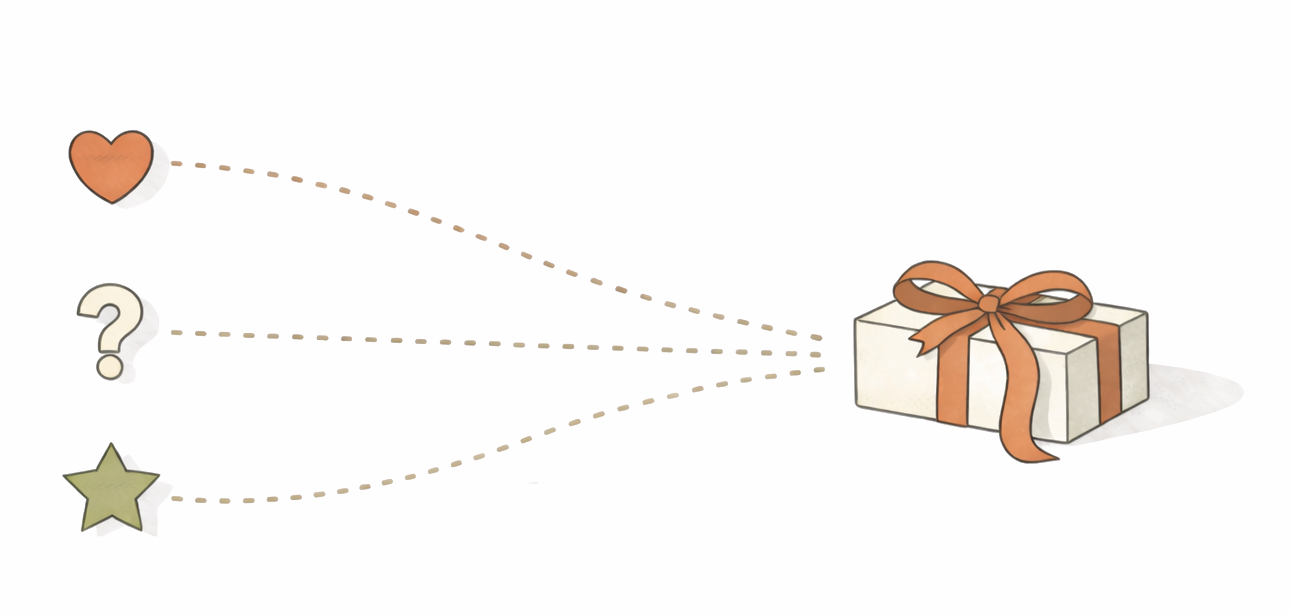
When you give a gift, you're doing something far more significant than transferring an item from your possession to someone else's. You're making a statement about the relationship. You're communicating something that words might not capture. You're participating in one of the oldest human rituals for building and maintaining social bonds.
Understanding this doesn't just make you better at choosing gifts. It changes how you think about the entire practice — and why it feels so loaded in the first place.
What Gifts Actually Communicate
Every gift carries an implicit message. The recipient may not consciously decode it, but they feel it.
"I see you."
A thoughtful gift demonstrates that you've paid attention. You noticed what they care about, what they need, what would make their life better or more enjoyable. The gift is evidence of observation — proof that they matter enough for you to notice.
"I understand you."
Beyond seeing, a good gift shows comprehension. You don't just know they like cooking; you understand their specific approach to it, what tools they have, what would actually be useful. The gift reflects not just awareness but understanding.
"You're worth my effort."
Gift-giving takes time, thought, and resources. When you invest those things in finding something meaningful, you're saying the relationship is worth that investment. The effort itself is part of the message.
"I want to strengthen this bond."
Gifts are social glue. They create a sense of reciprocity and connection. Even when no return gift is expected, giving creates a bond — a small thread in the web of mutual obligation and care that holds relationships together.
Why Gift-Giving Triggers Anxiety
If gifts are just objects, why does choosing them feel so stressful? Because we intuitively understand the stakes.
We're afraid of being misunderstood.
A gift that misses says something we don't mean to say. It might suggest we don't really know the person, don't care enough to try, or have a distorted view of who they are. The wrong gift can feel like a small betrayal of the relationship.
We're making our feelings visible.
Gift-giving is one of the few socially acceptable ways to express care concretely. That visibility is vulnerable. What if our expression doesn't land? What if it's not enough? The gift becomes a representation of our feelings, and that representation can be judged.
We're being evaluated.
Whether we like it or not, gifts invite assessment. Was it thoughtful? Appropriate? Generous? That evaluation reflects on us — our taste, our resources, our understanding of social norms, our knowledge of the recipient.
We might reveal the limits of our knowledge.
A poor gift choice can expose how little we actually know about someone, even someone we're supposed to be close to. That exposure is uncomfortable.
The Asymmetry Problem
There's a fundamental asymmetry in gift-giving that creates much of its difficulty.
When you give a gift, you experience the full weight of the decision: the deliberation, the uncertainty, the hope, the fear of missing the mark. You might spend hours or days thinking about it.
When someone receives a gift, they experience a moment. They open it, react, and move on. The extensive process that produced this moment is invisible to them.
This asymmetry means givers consistently overestimate how much recipients will analyze the gift. We project our own deliberation onto their reception. In reality, most recipients are simply pleased to be thought of — the specific object matters less than the gesture.
Understanding this can reduce anxiety. The recipient isn't scrutinizing your choice the way you scrutinized making it. They're registering that you showed up, that you tried, that you cared enough to give something.
What Recipients Actually Care About
Research on gift-giving consistently shows a gap between what givers think matters and what recipients actually value.
Givers overvalue:
Surprise. We think unexpected gifts are better. Recipients often prefer getting something they asked for — it shows you listened.
Expense. We think more expensive gifts communicate more care. Recipients value thoughtfulness over price, and expensive gifts can create uncomfortable obligation.
Uniqueness. We think unusual gifts are more impressive. Recipients often prefer useful, reliable choices over novel ones.
Recipients actually value:
Thoughtfulness. Evidence that you considered them specifically. A modest gift that shows attention beats an expensive gift that feels generic.
Usefulness. Things they'll actually use or enjoy. Practicality isn't unromantic — it's respectful of their real life.
Appropriateness. Gifts that fit the relationship and occasion. Nothing too extravagant, too intimate, or too impersonal for the context.
The relationship itself. The gift is a vehicle for connection. What recipients often remember most isn't the object but the feeling of being thought of.
The Gift Is Not the Point
Here's the central insight: the physical gift is a symbol, not the substance.
What's actually being exchanged is something intangible — attention, care, effort, understanding. The object is just the carrier for these things. A beautifully chosen gift works because it efficiently carries these intangibles. A poorly chosen gift fails because it doesn't.
This is why handwritten letters often land harder than expensive items. The letter is pure symbol — it has no material value, but it carries attention, care, and effort in concentrated form.
This is why presence can be more valuable than presents. Your time and attention, given directly rather than through an object, sometimes communicates more clearly.
This is why generic gifts feel hollow even when they're "nice." They might have material value, but they don't carry evidence of specific attention. The symbol is empty.
The Ritual Matters
Gift-giving is ritualistic, and the ritual elements carry meaning beyond the object itself.
The wrapping. Taking time to wrap something nicely signals care before the gift is even revealed. Unwrapping is a small ceremony that extends the moment.
The timing. Giving at the right moment — on the day, at the occasion, when they need it — shows attentiveness to context.
The words. What you say when giving the gift frames its meaning. "I saw this and thought of you" carries different weight than tossing something over wordlessly.
The setting. Giving in person, with attention, in a moment that feels significant — versus mailing something with no note — changes what's communicated.
Neglecting the ritual diminishes the gift. Honoring the ritual amplifies it.
Gift-Giving Across Relationships
The function of gifts changes based on the relationship.
In new relationships, gifts are exploratory. They test understanding and communicate interest. A good gift early in a relationship says "I'm paying attention to who you are."
In established relationships, gifts maintain connection. They reassure that the bond is still active, still valued. The gift says "I still see you, still care, haven't taken you for granted."
In complicated relationships, gifts can be attempts at repair or bridge-building. They can also be fraught with misinterpretation. The gift says "I'm trying" — but what it's trying to do may not be clear.
In obligatory contexts (workplace, acquaintances), gifts manage social expectations. They're less about deep connection and more about respecting norms. The gift says "I understand the social contract and honor it."
Understanding which context you're operating in helps calibrate the gift appropriately.
The Receiving Side
Receiving gifts well is its own skill, and it matters more than most people realize.
Receive with presence. Give your attention to the moment. Put down your phone. Look at the giver. Let them see you receive it.
Express appreciation for the thought. Even if the gift isn't quite right, the effort behind it deserves acknowledgment. "You thought of me" is always true and always meaningful.
Don't critique immediately. "Oh, I already have one of these" or "This isn't really my style" may be true, but saying it in the moment is unkind. The time for practical feedback is later, if ever.
Use or display the gift. When practical, showing that you're actually using the gift is powerful feedback for the giver. It completes the exchange.
Poor receiving undermines future giving. If people feel their gifts are unappreciated, they give less thoughtfully or stop giving altogether.
What This Means for How You Give
Understanding the psychology changes the practice:
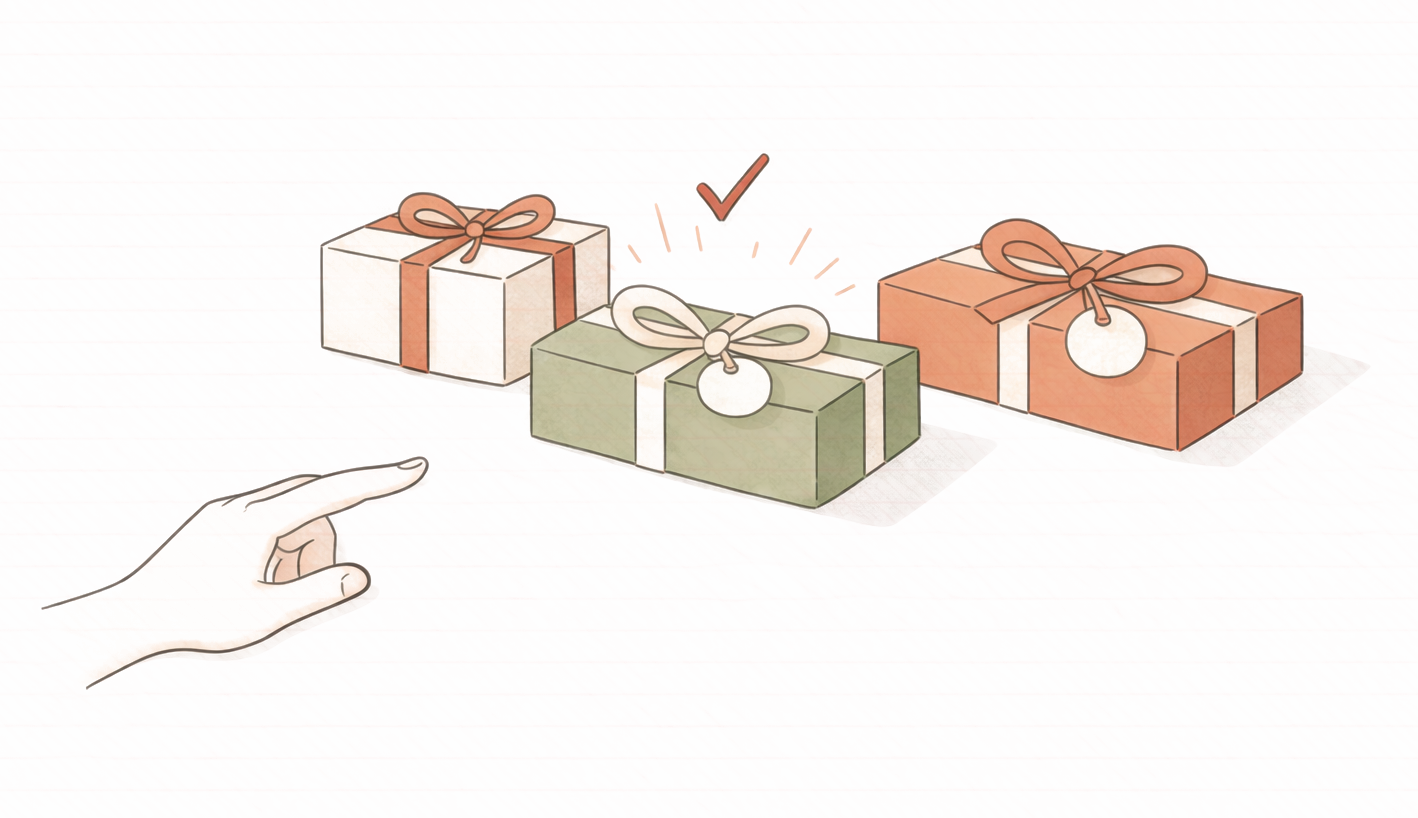
Focus on the message, not just the object. Ask yourself what you're trying to communicate. Then find an object that carries that message clearly.
Invest in the ritual elements. Presentation, timing, and words matter. Don't treat them as afterthoughts.
Lower the pressure on perfection. Recipients are more forgiving than you imagine. A genuine attempt that falls short is still a genuine attempt. They'll feel the intention.
Match the gift to the relationship. Don't over-gift or under-gift for the actual closeness. Accurate calibration shows social intelligence.
Remember that presence often outperforms presents. Your attention, your time, your care expressed directly — these sometimes communicate more than any object.
Why Gift-Giving Persists
In an age when people can buy whatever they want, when wish lists and gift cards exist, why does traditional gift-giving persist?
Because the inefficiency is the point.
If gift-giving were purely about transferring value, we'd all just send each other cash. The fact that we don't — that we insist on choosing, wrapping, presenting — reveals that the process itself carries meaning.
The effort of choosing says something. The ritual of giving says something. The imperfect, inefficient nature of the whole exchange is what makes it human.
We don't give gifts because they're the most efficient way to transfer goods. We give gifts because they're an irreplaceable way to transfer care.
Let Ribbon Help
Ribbon understands that gift-giving is about more than finding products. It's about understanding people and matching that understanding to something concrete.
Tell us about the person — who they are, what they care about, what you're trying to communicate — and we'll help you find something that carries the right message.
Not just a gift. The right gift for what you're actually trying to say.
Frequently Asked Questions
Why does gift-giving cause so much anxiety?
Because we intuitively understand it's not just about the object. We're making our feelings visible, inviting evaluation, and risking exposure of how little we might actually know someone. The stakes feel higher than "picking a product" because they are.
Does an expensive gift communicate more care?
Research says no. Recipients value thoughtfulness over price. An expensive gift can even create uncomfortable feelings of obligation. A modestly priced gift that shows specific attention usually lands better.
Is it okay to ask someone what they want?
Yes. Givers often think this ruins the surprise, but recipients frequently prefer getting something they asked for — it shows you listened. Asking can be its own form of care.
What makes a gift meaningful?
Evidence of attention. The recipient should be able to sense that you thought about them specifically — their interests, needs, or situation. A meaningful gift couldn't have been given to just anyone; it makes sense for this person in particular.
Why do some people dislike receiving gifts?
Often because they feel obligated to reciprocate, uncomfortable being the focus of attention, or anxious about reacting "correctly." Understanding this can help you give to such people in lower-pressure ways.
Find the perfect gift, every time
Ribbon is an AI-powered gift assistant that helps you find thoughtful, personal gifts for the people you care about. Try it free — no signup required.
Try Ribbon Free →