Planning Gifts in Advance: A Calmer Approach
Planning gifts ahead transforms stressful scrambles into calm, thoughtful choices. Learn how to build a simple gift planning system that actually works.
The week before a birthday or holiday, you're scrambling. Searching for ideas, paying for rush shipping, settling for whatever's available. The gift you give is fine, but it's not what you would have chosen with more time.
This pattern repeats because gift occasions feel sudden even when they're completely predictable. Birthdays happen on the same date every year. Holidays don't move. The surprise isn't the occasion—it's your unpreparedness for it.
Planning gifts in advance breaks this cycle. Not elaborate planning—just enough structure to give yourself time and options. The result is better gifts with less stress.
Why Planning Ahead Matters
The benefits of advance planning are straightforward:
Better selection. With time, you can search more thoroughly, find unique options, and choose from quality rather than availability. This planning enables truly thoughtful gift-giving.
Lower costs. You avoid rush shipping, last-minute markups, and panic purchases. You can wait for sales, compare prices, and budget properly.
Less stress. Shopping without urgency is genuinely more enjoyable. You're browsing, not scrambling.
More thoughtfulness. Time allows for thought. You can consider what someone would actually want instead of grabbing the first reasonable option.
Fewer regrets. The gift you choose deliberately is the gift you wanted to give, not the gift you settled for.
None of this requires becoming a hyper-organized person. It just requires a simple system and the habit of using it.
Building a Basic Gift Planning System
A gift planning system has three components: a calendar of occasions, a collection of ideas, and a timeline for action.
Component 1: The Gift Calendar
Start by documenting every gift-giving occasion in your year. This includes:
- Birthdays of family, close friends, and anyone else you exchange gifts with
- Anniversaries (your own and others you celebrate)
- Holidays where you give gifts (Christmas, Hanukkah, etc.)
- Other occasions (graduations, baby showers, housewarmings)
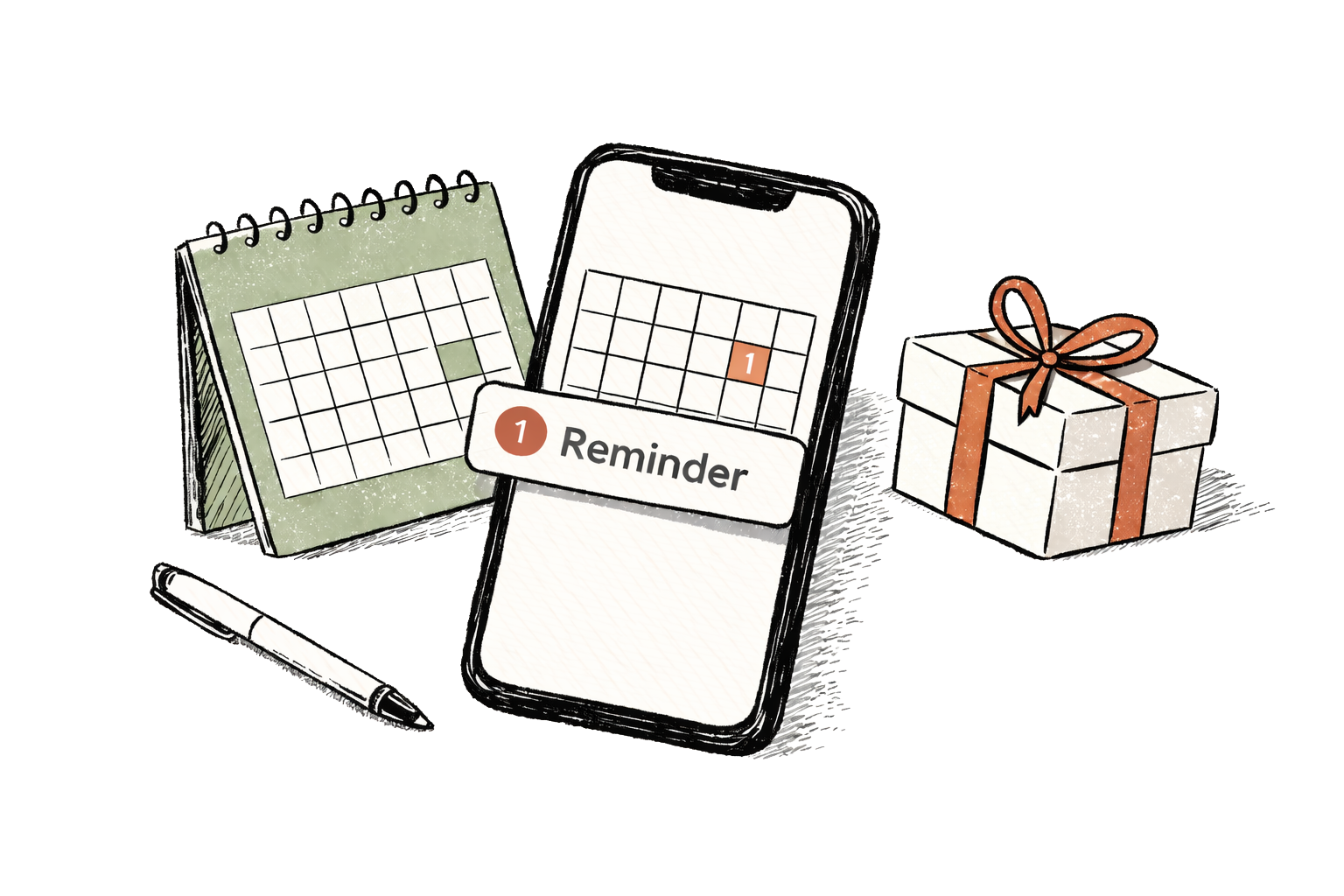
Put these into whatever calendar system you actually use—digital or paper, dedicated or alongside your other events. The format matters less than consistency.
For each occasion, set a reminder for at least two weeks before the date. Three to four weeks is better for occasions requiring shipped gifts or custom items.
Component 2: The Idea Collection
Throughout the year, you'll encounter gift ideas—things people mention wanting, products you notice they'd love, experiences that match their interests.
Create a place to capture these. Options include:
- A note on your phone organized by person
- A spreadsheet with columns for recipient, idea, source, and price
- A dedicated section in your planner or journal
- Gift tracking apps designed for this purpose
The format matters less than the habit. When you hear a gift idea, capture it immediately. Don't trust yourself to remember—you won't.
Component 3: The Action Timeline
When a reminder appears on your calendar, you're not starting from scratch—you're reviewing collected ideas and making a selection.
A reasonable timeline:
- 4 weeks out: Review ideas, begin research, identify top options
- 2-3 weeks out: Make your selection, place order or make purchase
- 1 week out: Confirm delivery, wrap if needed, write card
- Day of: Deliver or send
This timeline accommodates shipping delays, backorders, and the reality that life sometimes interrupts plans. Starting earlier gives you buffer.
Making the System Work
A system only works if you use it. Here's how to make gift planning stick:
Start small
Don't try to systematize every gift relationship immediately. Begin with the most important occasions—perhaps five to ten people whose birthdays and gift occasions you genuinely want to handle well.
As the habit develops, expand. But starting with a manageable scope prevents the system from feeling overwhelming.
Review monthly
At the start of each month, look at the gift occasions coming in the next 30-60 days. This review takes five minutes and ensures nothing sneaks up on you.
Monthly review also lets you spot occasions that might need longer lead times—custom gifts, experience bookings, or items that tend to sell out.
Capture in the moment
The system's power comes from year-round collection, not just pre-occasion searching. When you hear someone mention something they want, add it to your idea collection immediately.
This is the habit that separates good gift-givers from everyone else. They're not smarter or more creative—they're just better at capturing information when it appears.
Keep it simple
Resist the urge to over-engineer your system. Complex systems get abandoned. You need: a list of occasions with dates, a list of ideas by person, and reminders to act. That's it.
If you find yourself spending more time maintaining the system than it saves you, simplify.
A Sample Annual Rhythm
Here's what gift planning looks like across a typical year:
January: Review the full year ahead. Note all birthdays, anniversaries, and holidays. Set calendar reminders for each. Start fresh idea lists for each person.
Monthly: Quick review of upcoming occasions. Capture any gift ideas you've encountered. Check that nothing is approaching without a plan.
Before each occasion: Review collected ideas. Research and compare options. Make selection with time to spare. Handle ordering, wrapping, and delivery without rush.
After giving: Note what you gave and how it was received. This prevents repetition and informs future choices.
This rhythm adds perhaps an hour of total time across a year—far less than the cumulative stress of repeated last-minute scrambles.
Planning Ahead for Specific Occasions
Different occasions benefit from different lead times:
Birthdays
Two to three weeks is usually sufficient. This allows for standard shipping and thoughtful selection. For close family or partners where you want something special, start a month out.
Winter Holidays
Start in early November at the latest. Shipping delays, popular items selling out, and the sheer volume of gifts to coordinate all justify early action. Some people begin even earlier—September isn't unreasonable for complex holiday gift lists.
Weddings and Major Events
These require longer timelines: checking registries early, coordinating with others who might be contributing to larger gifts, and allowing time for custom or meaningful presents.
Spontaneous Occasions
Some gift occasions can't be planned—a friend's promotion, an unexpected housewarming, a thank-you gift after someone helps you out. Having a small reserve of universally-appropriate gifts (quality candles, wine, chocolate) handles these without special trips.
The Emotional Shift
Beyond the practical benefits, planning ahead changes your emotional relationship with gift-giving.
Instead of dreading approaching occasions, you can anticipate them. Instead of feeling behind, you feel prepared. Instead of settling, you're choosing.
This shift matters. Gift-giving should be a source of connection and joy, not stress and obligation. Planning ahead restores it to what it's supposed to be: an opportunity to show people they matter to you.
Ribbon is an AI-powered gift assistant that helps you find thoughtful, personal gifts for the people you care about. Try Ribbon free →
Frequently Asked Questions
How far in advance should I plan gifts?
Two to three weeks is sufficient for most occasions. For major holidays like Christmas, start in early November. For special occasions requiring custom or hard-to-find items, begin a month or more ahead. The key is having enough time to choose thoughtfully rather than settle urgently.
What's the best way to keep track of gift ideas?
Use whatever system you'll actually maintain—a note app on your phone, a spreadsheet, a section of your planner, or a dedicated gift tracking app. The format matters less than the habit of capturing ideas immediately when you encounter them.
How do I remember to start planning early enough?
Set calendar reminders for each gift occasion, placed two to four weeks before the date. A monthly review of upcoming occasions also helps catch anything that might be approaching without a plan.
What if I'm not naturally organized?
Gift planning doesn't require being organized in general—just having one simple system that you maintain. Start with just your most important gift relationships. A basic note on your phone with names and ideas is enough to begin.
Should I buy gifts ahead of time or just plan ahead?
Either works. Some people prefer buying early to spread costs and avoid seasonal shipping delays. Others prefer planning early but purchasing closer to the occasion. The key benefit of planning is having time and options, not necessarily early purchasing.
Find the perfect gift, every time
Ribbon is an AI-powered gift assistant that helps you find thoughtful, personal gifts for the people you care about. Try it free — no signup required.
Try Ribbon Free →